support@dragon-dealz.ch
 +1 (888) 303-8337









The Backstory: A Good Product With A Broken Listing

The product itself was solid. A kitchen storage set, decent reviews (4.2 stars), reasonably priced, nothing wrong with the item in anyone’s hands. But on Amazon, it had basically gone silent.
Sessions had dropped by more than half over four months. Conversion rate was sitting around 4%, which is low for this category. And the keyword rankings that used to put it on page one had quietly slipped to page four or five for anything that actually mattered.
The seller’s first instinct, and this is common when an Amazon product is not selling, was to drop the price. That helped for about a week, then things went right back to flat. Price wasn’t the real problem. The listing was.
What Was Actually Wrong
Once we pulled the listing apart, a few things stood out fast:
- The main image was low resolution and didn’t show the product in use, just a plain box shot
- The title was stuffed with keywords in a way that read like gibberish, not something a real shopper would search
- Bullet points focused on specs instead of what the product actually solved for the buyer
- Backend search terms hadn’t been touched in over a year and missed several relevant terms
- PPC campaigns were running but bidding on broad, unrelated keywords that burned budget without moving rank
- Reviews mentioned a sizing confusion that was never addressed anywhere in the listing copy
None of these are dramatic on their own. But stacked together, they’re exactly the kind of slow decay that quietly kills a listing’s visibility. This is usually how it goes: it’s rarely one big mistake, it’s five small ones compounding.
Building The Relaunch Plan

Before touching anything, we mapped out a proper Amazon listing relaunch plan instead of just randomly editing bits and pieces. Here’s roughly what that looked like:
- Keyword research reset – pulled fresh search volume data and rebuilt the keyword list from scratch, including long-tail terms that matched actual buyer language
- Title rewrite – clear, readable, front-loaded with the primary keyword but written as a human wrote it
- New photography – added lifestyle shots, a size comparison image, and an infographic addressing the sizing confusion from reviews
- Bullet point overhaul – rewritten around benefits and objections, not just features
- Backend search term update – filled every available byte with relevant, non-duplicated terms
- A+ Content added – the listing had none before, so we built out brand story and comparison modules
- PPC restructure – paused the wasteful broad campaigns and rebuilt around tightly targeted exact-match and phrase-match groups
- Pricing left untouched – deliberately, so we could isolate what the relaunch itself was doing
This is really the core of any solid Amazon product ranking strategy – you fix the foundation (content, images, backend data) before you throw more ad spend at the problem. Ads can’t fix a listing that isn’t converting once someone clicks.
The First 30 Days
We didn’t expect fireworks in week one, and there weren’t any. Amazon’s algorithm needs a bit of time to “trust” a relisted product again, especially after a long stretch of declining performance.
By day 15, though, sessions were already up 38% compared to the pre-relaunch baseline. Conversion rate climbed from 4% to just over 7%, mostly thanks to the new images and clearer bullets doing their job of answering buyer questions before they even had to ask.
30-Day Snapshot
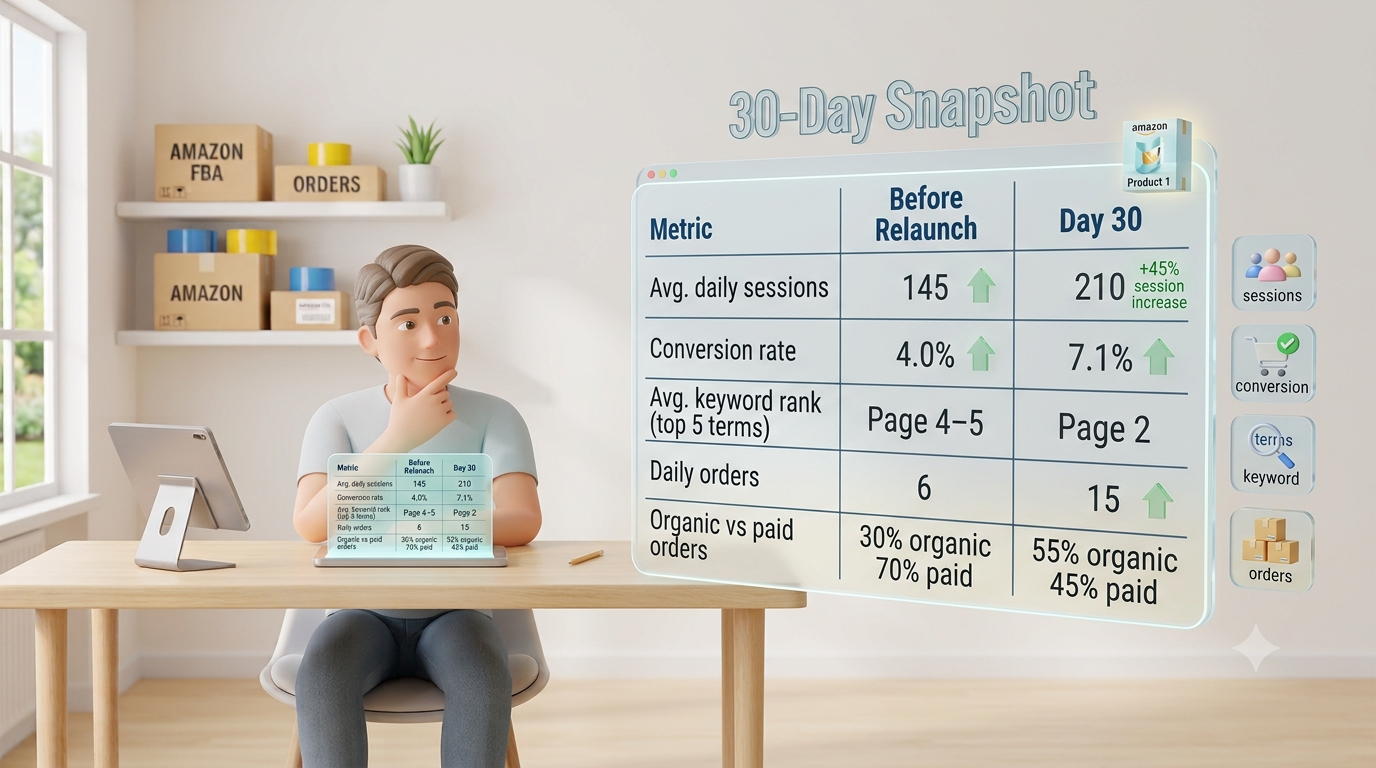
That organic shift matters a lot. Early on, paid traffic was carrying almost the whole listing. By day 30, organic was starting to pull real weight, which is usually the clearest sign that an effort to improve Amazon ranking is actually sticking rather than just being propped up by ad spend.
Day 30 to Day 60: Where It Really Clicked
This is the stretch where things went from “promising” to “clearly working.” The algorithm had enough fresh sales velocity and click-through data to start rewarding the listing more consistently.
60-Day Snapshot
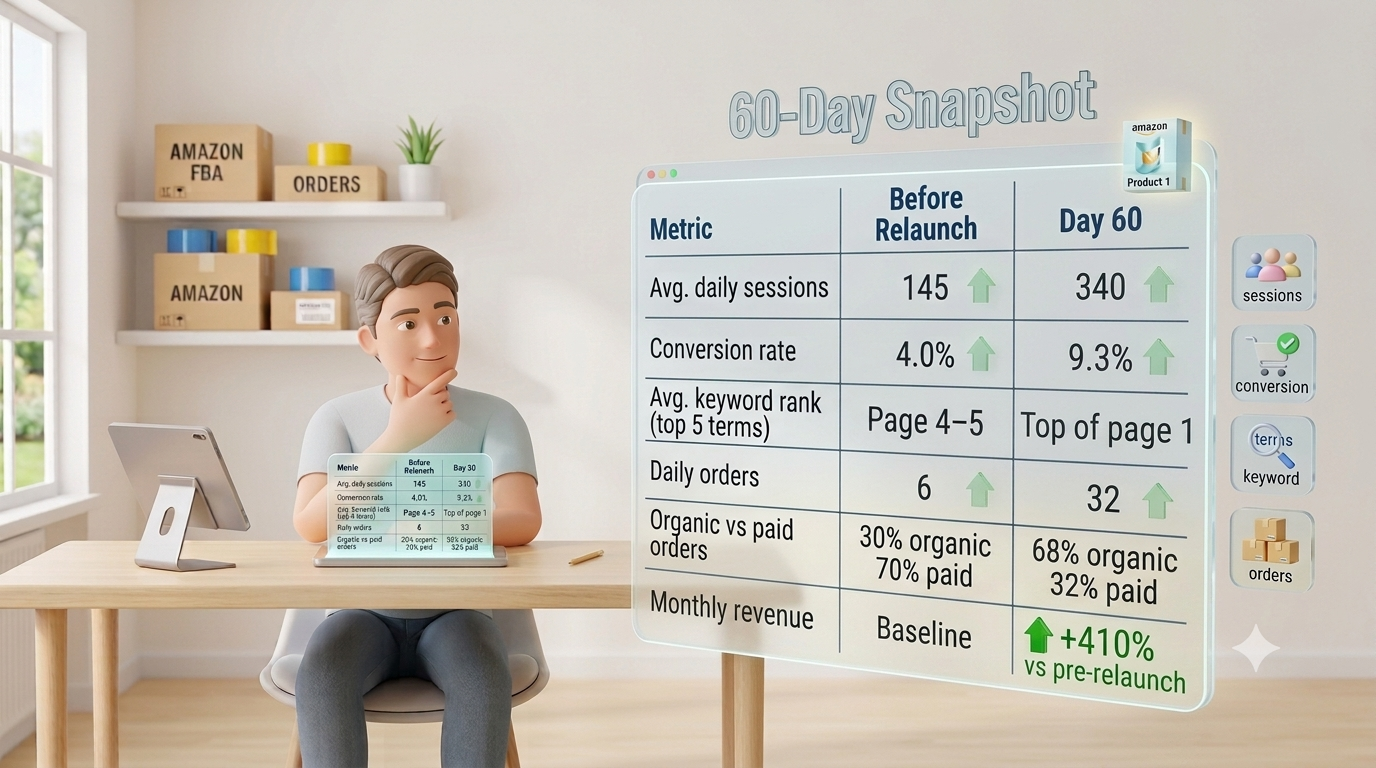
Three of the five target keywords landed in the top 5 organic positions. Two more sat comfortably on page one. PPC spend actually dropped over this period because it no longer needed to compensate for weak organic visibility; the ad account was just… calmer, in a good way.
This kind of trajectory is what a genuine Amazon sales recovery actually looks like. It’s not an overnight spike. It’s a steady climb that compounds because each piece (content, images, keywords, ads) reinforces the others instead of working in isolation.
What Made The Biggest Difference
If you’re trying to figure out what to prioritize for your own situation, here’s what moved the needle most in this specific case, roughly in order:
- New main image and lifestyle photos – this alone lifted click-through rate noticeably before conversion even changed
- Bullet points rewritten around real objections – the sizing confusion fix cut return-related questions almost immediately
- Backend keyword refresh – opened up impressions for terms the listing wasn’t even showing up for before
- PPC restructure – stopped wasting budget on broad terms and redirected it to what was actually converting
The price never moved. That’s worth repeating, because so many sellers assume the fix for a slow listing is to discount it. Sometimes it’s not the price at all – it’s whether the listing is actually telling shoppers what they need to know.
What This Means If You’re Thinking About A Relaunch
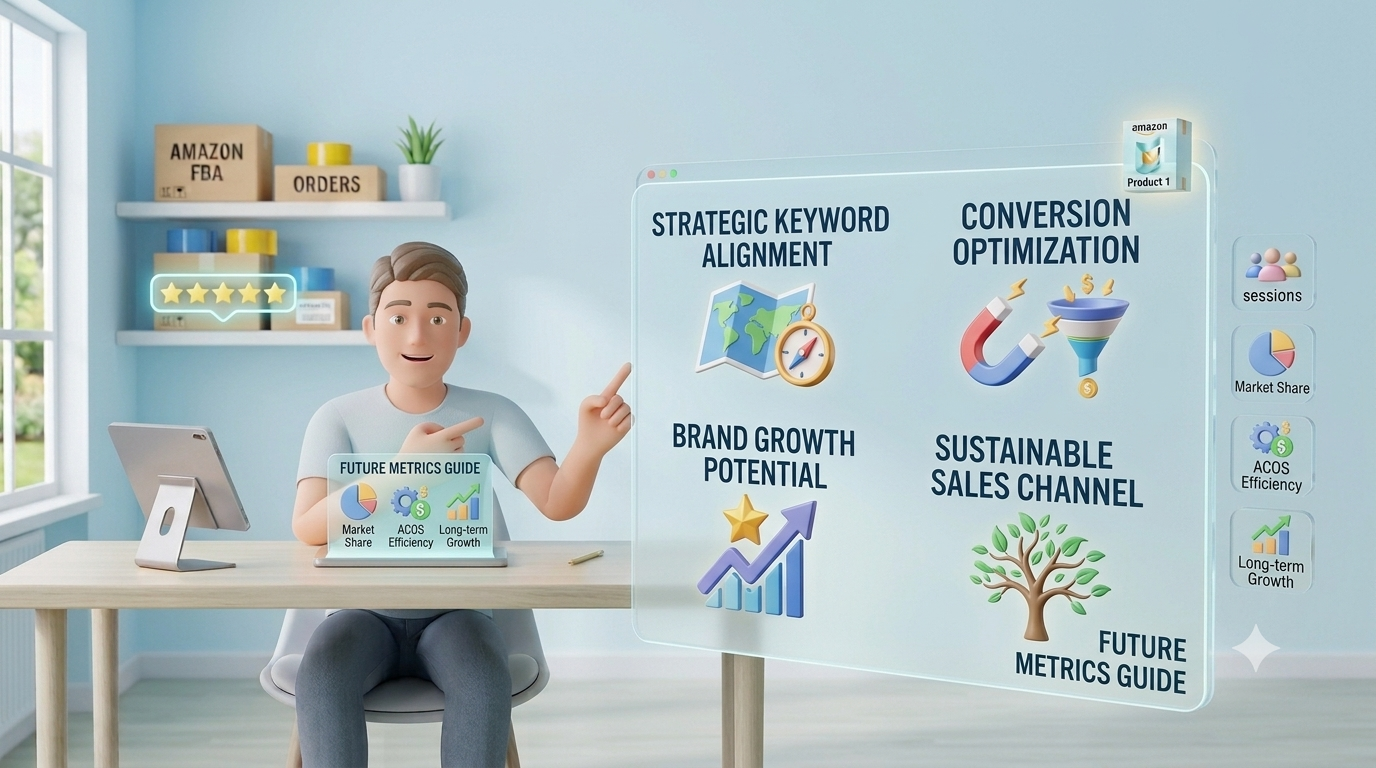
If your numbers look anything like what this seller started with – sessions falling, rank slipping, conversion stuck – it’s worth stepping back and auditing the whole listing before assuming it’s a pricing or demand problem. A proper approach to relaunching Amazon product listings means looking at images, copy, keywords, and ads together, not one at a time.
It also takes patience. The 30-day mark showed early signs of life, but the real payoff came in the 30-60 day window once Amazon’s algorithm had enough data to trust the listing again. If you pull the plug on a relaunch after two weeks because the numbers aren’t dramatic yet, you’re likely quitting right before the curve bends upward.
FAQs:
Stuck
Most listings start showing early movement, better sessions, and small rank improvements within the first 10 to 15 days. The bigger gains, especially organic ranking jumps, tend to show up between day 30 and day 60, once Amazon’s algorithm has enough fresh sales data to act on.
It depends on why sales dropped, but in this case study, price was left completely untouched, and the listing still recovered. If the core issue is weak images, unclear copy, or missing keywords, a discount just masks the problem temporarily instead of fixing it.
In almost every situation, you fix the existing listing rather than starting fresh. Creating a new listing means losing your review history and sales history, both of which actually help a relaunch succeed faster.
In this case, paid spend went down by day 60 even as total orders went up, because organic orders picked up a bigger share. That’s a common pattern: a well-executed relaunch reduces reliance on ads over time rather than increasing it.
Start with your main image and your conversion rate. If sessions are steady but conversion has dropped, the issue is usually on the listing itself outdated photos, unclear bullets, or unaddressed review concerns- rather than a traffic problem.